
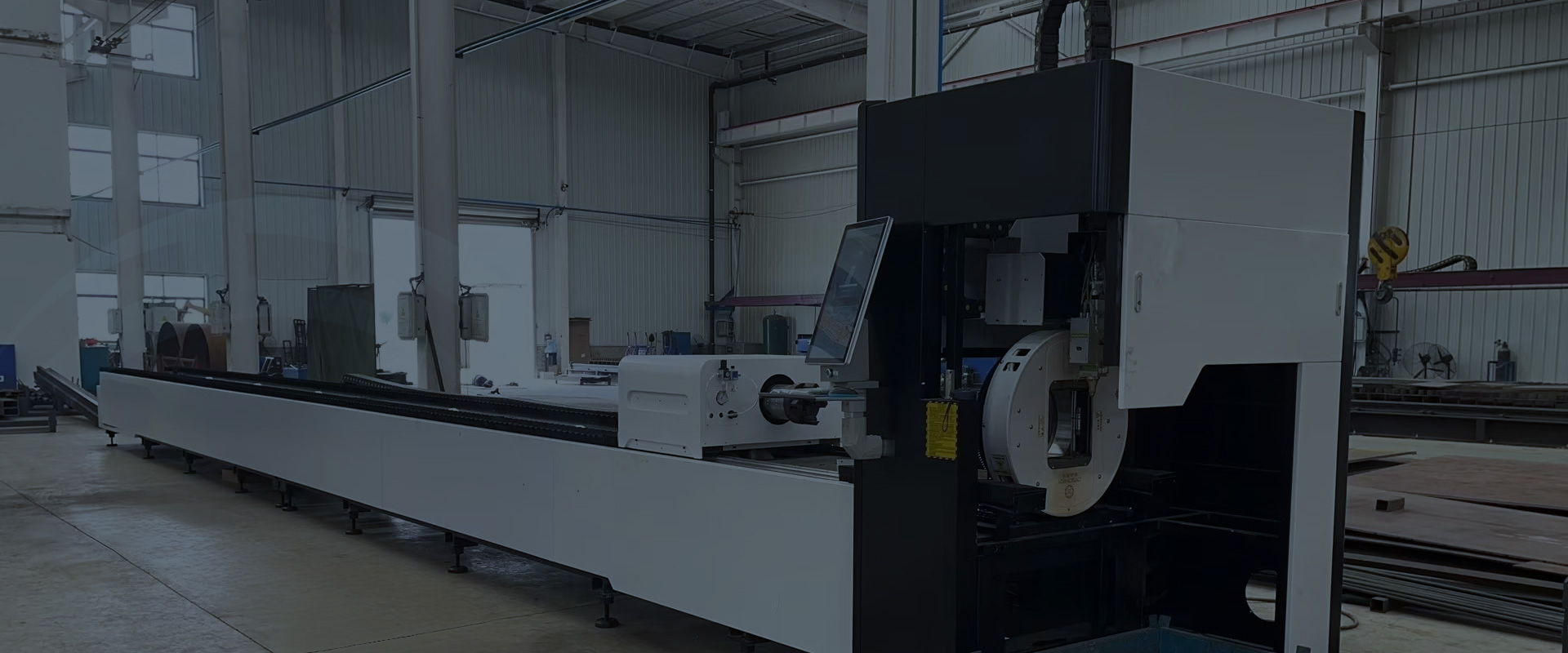
• Component Plate Cutting: Precisely cut flange plates and web plates of H-beams, wall plates of box columns, etc., to directly obtain parts ready for welding. This is the most basic and common application.
• Complex Curve and Special-Shaped Part Cutting: Easily process special-shaped components such as arcs, waves, and three-dimensional curved surfaces that are difficult to process using traditional methods, meeting the aesthetic requirements of modern architecture.
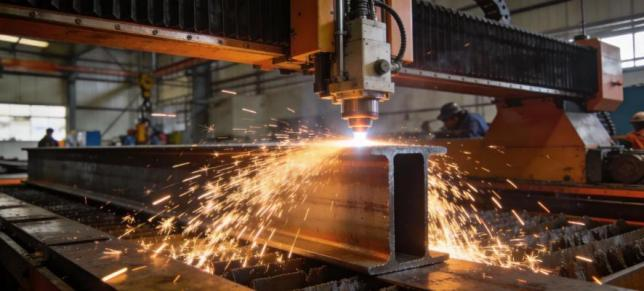
• Bolt Hole Group Processing: Cut all bolt holes at beam-column joints with high precision in one operation, with hole position accuracy of ±0.1mm, ensuring "zero reaming" during on-site installation.
• Welding Groove Processing: Cut various forms of grooves (V-shaped, K-shaped, double-sided U-shaped, etc.) on the edges of thick plates to prepare for subsequent high-quality automatic welding, which is the prerequisite for ensuring the penetration of key welds.
• Diaphragm Through-Hole and Liner Plate Cutting: Cut complex through-holes in the internal
diaphragms or joint areas of box columns for steel bar penetration or concrete pouring, and precisely cut internal stiffening liner plates.
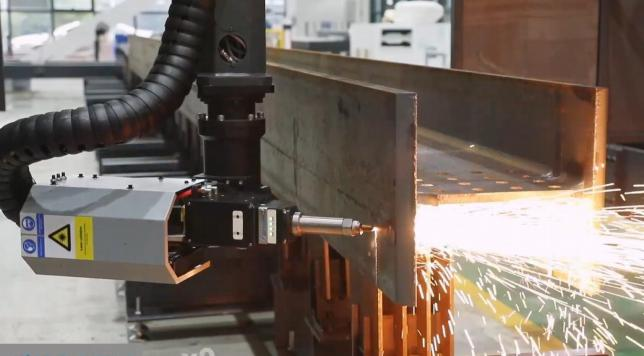
• Curtain Wall Support Systems: Cut complex curtain wall connectors, claw parts, and supporting steel structures.
• Decorative Hollowing and Patterns: Directly cut decorative patterns on outdoor railings, canopies, indoor stairs, shared space structures, etc., to achieve the integration of art and structure.
During the factory prefabrication stage, reserve precise penetration holes for building MEP (mechanical, electrical, plumbing) pipelines on steel beams and columns to avoid weakening structural strength and low construction efficiency caused by on-site drilling.
| Characteristic | Laser Cutting | Flame Cutting | Plasma Cutting |
| Cutting Accuracy | Extremely high,smooth cut surface, no slag | Moderate, with large slope | Low, with molten slag |
Heat-Affected Zone | Minimal, minimal material deformation | Large, easily causes plate deformation | Moderate, obvious deformation |
| Cut Surface Quality | Excellent, can be directly welded, reducing grinding | Average, requires slag removal | Rough, requires secondary processing |
| Material Adaptability | Wide (carbon steel, stainless steel,aluminum, etc.) | Wide (various metals) | Mainly for carbon steel |
| Pattern Complexity | Unlimited possibilities, suitable for any complex pattern | Relatively complex patterns, but limited accuracy | Simple shapes, poor curve accuracy |
| Automation Level | Fully automatic, easy to integrate into production lines | Semi-automatic/full automatic | Semi-automatic/ manual |
| Operating Cost | Medium (electricity, consumables) | High (electrodes, nozzles) | Lowest (gas) |
◦ "Weld directly without grinding": High-quality cut surfaces reduce pre-welding cleaning work and reduce the risk of welding defects such as slag inclusion and incomplete fusion.
◦ "Zero reaming assembly": Extremely high hole position accuracy enables direct alignment and
installation of components, improving the installation accuracy and stress performance of the overall structure.
◦ "Three-in-one: Punching + Cutting + Grooving": One laser cutting machine can replace multiple traditional equipment, shortening the process flow.
◦ Reduce secondary processing: Save a lot of labor and time for grinding, correction, and reaming.
◦ Optimize nesting: Software can automatically optimize nesting, greatly improving material utilization and saving material costs.
◦ Enable architects to break free from the constraints of traditional processing methods, boldly design various complex and free-form spatial surfaces and joint forms, and turn "impossible" into "reality".
◦ Laser cutting is an ideal terminal for direct production driven by BIM (Building Information Modeling) data. Directly export processing codes (DXF/Nest files) from BIM models to realize "design-
manufacturing" integration, which is the core link of steel structure smart factories.
 Tom Jia@163.com
 +86 135 2541 1253
 No.2 Leipade Industrial Park, Zichuan District, Zibo City, Shandong Province




© 2025 Shandong Hoysook Laser Technology Co., Ltd.
 Свяжитесь с нами