
 Contact Us
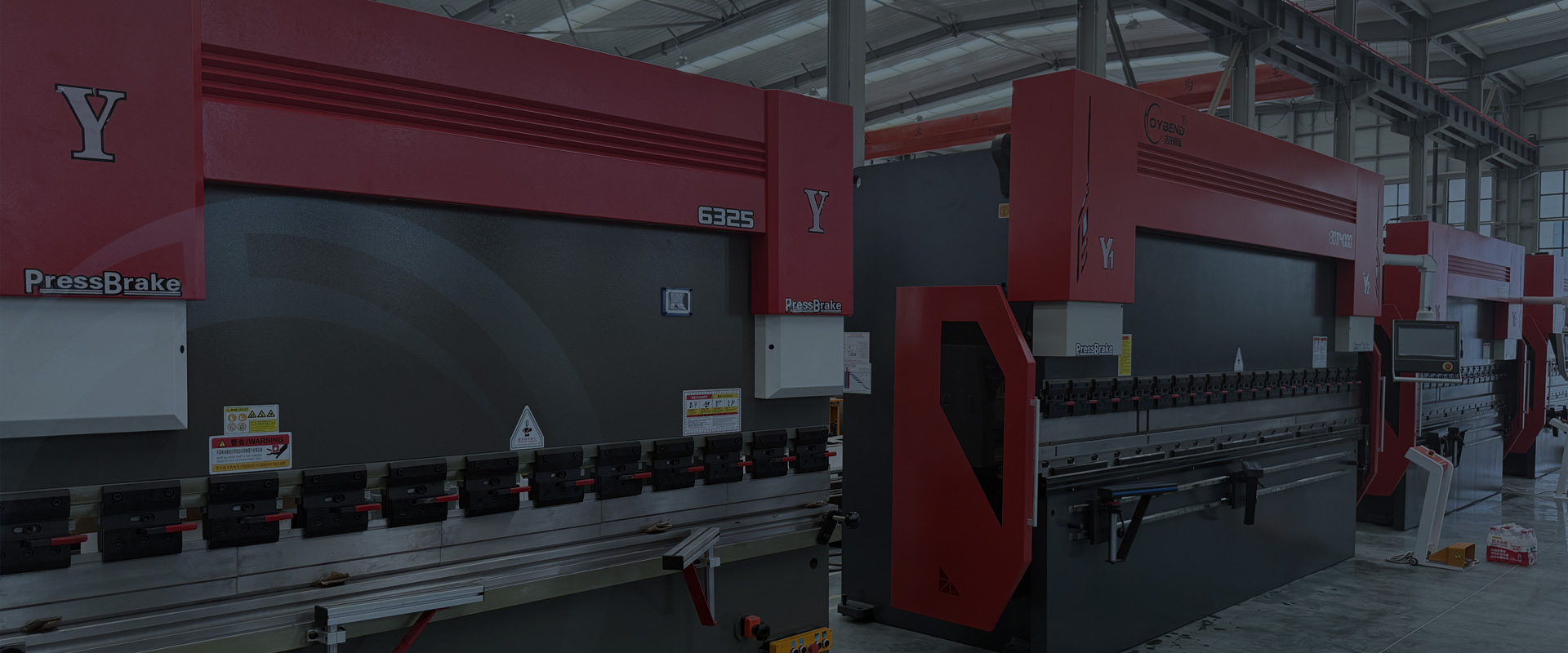

Press Brakes: The Art and Science of Precision Metal Bending
In the world of sheet metal fabrication, few machines are as fundamental and versatile as the press brake. From simple chassis brackets to complex aerospace panels, press brakes transform flat metal sheets into three-dimensional parts with precise angles and bends. As manufacturing moves toward shorter runs, higher complexity, and tighter tolerances, press brake technology has evolved dramatically. This article explores the core principles, modern drive systems, CNC controls, tooling innovations, and the role of press brakes in the smart factory ecosystem.
Modern CNC press brakes can achieve bending accuracy of plus minus 0.25 degrees and repeatability of plus minus 0.01mm, enabling manufacturers to replace costly stamping operations for medium and low volume production.
How a Press Brake Works
A press brake consists of a ram (upper beam) and a bed (lower table). A punch is attached to the ram, and a V die is mounted on the bed. The sheet metal is placed between the punch and die. The ram descends, forcing the material into the die, creating a bend. The key parameters are bending force tonnage, bending length, stroke depth, and angle control. Modern machines use CNC backgauges to position the sheet accurately, ensuring consistent flange lengths across multiple parts.
Types of Press Brake Drive Systems
The drive technology defines the machine's performance, energy efficiency, and maintenance requirements. Three main types dominate the market:
Hydraulic press brakes use hydraulic cylinders to move the ram. They offer high tonnage (up to 2000 tons or more) and are suitable for thick plates and long bending lengths. Modern hydraulic machines feature proportional valves and closed-loop control for accuracy.
Electric servo press brakes use servo motors and ball screws or belts to drive the ram. They are faster (up to 300 mm per second approach speed), more energy efficient (consuming power only during bending), and extremely precise. Ideal for thin to medium gauge materials and high cycle applications.
Hybrid press brakes combine a hydraulic system with servo drive technology, offering the best of both worlds: high force capability with reduced energy consumption and improved accuracy compared to traditional hydraulics.
Key Performance Characteristics
Below is a typical specification comparison for a mid range CNC press brake 100 to 200 tons bending capacity:
| Parameter | Typical Value Range |
|---|---|
| Bending force tonnage | 40 tons – 500 tons (special up to 2000 tons) |
| Bending length | 1.5 m – 6 m (standard) |
| Approach speed | 120 – 300 mm per second |
| Bending speed | 5 – 25 mm per second |
| Return speed | 150 – 350 mm per second |
| Repeatability | ±0.01 mm – ±0.005 mm |
| Backgauge axes | 2 – 6 axes (X, R, Z, etc.) |
| Maximum material thickness (mild steel) | 6 mm – 30 mm (depends on tonnage and V die) |
CNC Controls and Angle Measurement Systems
The heart of a modern press brake is its CNC controller. Leading systems like Delem, Cybelec, or ESA offer touch screen interfaces, 3D part programming, and offline simulation. Key features include:
Direct angle input: Operators enter the target angle, and the controller automatically calculates required ram depth and compensates for springback.
Real time angle measurement: Lasers or mechanical sensors measure the actual angle during bending and adjust the ram position instantly, ensuring first part correct quality.
Crowning compensation: Automatic deflection compensation systems counteract the natural deflection of the ram and bed, ensuring consistent angle along the entire bending length.
Tool library: Stored geometries of punches and dies allow automatic calculation of bending sequences and collision checking.
Modern CNC press brakes with dynamic crowning and angle measurement reduce setup time by up to 75 percent, making batch size 1 economically feasible.
Tooling: Punches and Dies
Tooling selection directly impacts bending quality and flexibility. Standard tooling systems include European style (promecam), American style, and quick change systems.
Punch types: Straight, gooseneck (for tall flanges), acute angle, hemming, and radius punches.
Die types: Single V, multi V, channel dies, rocker type dies, and specialty dies for offset bends.
Quick change tooling: Clamping systems that reduce tool change time from minutes to seconds, essential for high mix low volume shops.
Precision ground tooling: Delivers consistent angle and bend line accuracy, especially for stainless steel and aluminum.
Automation and Robotics Integration
To maximize press brake utilization, manufacturers increasingly adopt automated bending cells. Typical configurations include:
Robotic part handling: A 6 axis robot picks up flat blanks from a stack, presents them to the backgauge, supports the part during bending, and places finished parts on a conveyor.
Automatic tool changers (ATC): For machines with multiple tools, ATC systems swap punches and dies automatically between bending sequences.
Part turnover devices: Used for complex parts requiring multiple bends from both sides; robots flip the part automatically.
Offline programming and simulation: Robot paths and bending sequences are simulated offline, reducing production interruptions.
An automated press brake cell can operate lights out for 8 to 16 hours, significantly increasing throughput and reducing labor costs.
Materials and Bending Considerations
Different materials behave differently under bending loads. The table below provides general guidelines for air bending on a press brake:
| Material | Minimum bend radius (relative to thickness) | Springback tendency | Recommended tooling |
|---|---|---|---|
| Mild steel | 0.5 to 1 x thickness | Low | Standard punches, V die opening 8 x thickness |
| Stainless steel 304 | 1 to 2 x thickness | High | Hardened tools, larger V die, use coining if possible |
| Aluminum 5052 H32 | 0.5 to 1 x thickness | Low to medium | Sharp edge tools, lubricated die |
| Aluminum 6061 T6 | 2 to 3 x thickness | High | Risk of cracking, use larger radius punch |
| High strength steel | 1.5 to 3 x thickness | Very high | Requires higher tonnage, special die coatings |
Applications Across Industries
Press brakes serve virtually every sector that uses sheet metal components:
Automotive: Brackets, chassis components, fuel tanks, exhaust heat shields, door beams.
Construction and architecture: Roof flashing, window frames, elevator doors, stainless steel cladding, handrails.
Agricultural and heavy equipment: Chassis parts, fenders, fuel tanks, operator platforms.
Electronics and enclosures: Server racks, electrical cabinets, control panels, chassis for medical devices.
Aerospace: Bracket assemblies, interior trim, ducting, support ribs.
Custom fabrication and job shops: Prototyping, short run production, replacement parts, artistic metalwork.
A modern CNC press brake with an 8 hour robotic cell can replace two manual press brakes and three operators, reducing cost per part by 40 to 60 percent for medium volume runs.
Maintenance and Safety
Press brakes are high force machines requiring regular attention. Essential practices include:
Daily inspection of hydraulic oil levels and leaks for hydraulic machines.
Regular cleaning of light curtains and laser safety guards.
Checking tooling for wear or damage; regrinding or replacing as needed.
Calibrating backgauge and crowning systems annually.
Training operators on safe use of foot pedals, two hand controls, and light curtain bypass procedures.
Future Trends: Smart Bending and Digital Twins
The next generation of press brakes will integrate deeper with factory wide digital systems:
Digital twin simulation: Full machine and robot simulation offline to validate bending sequences and detect collisions before production starts.
Predictive maintenance: Sensors monitor vibration, oil quality, and drive torque, predicting failures before they occur.
Adaptive bending algorithms: Using machine learning to compensate for material variations automatically, eliminating trial bends.
Connected workcells: Seamless integration with upstream laser cutting and downstream welding via MES and ERP systems.
HOYSOOK Industrial Solutions — advanced press brake technology from hydraulic to electric servo. Precision bending tooling, CNC controls, and robotic integration for modern sheet metal fabrication.
 bruce@hoysook.com
 +86 150 6978 7316
 No.2 Leipade Industrial Park, Zichuan District, Zibo City, Shandong Province